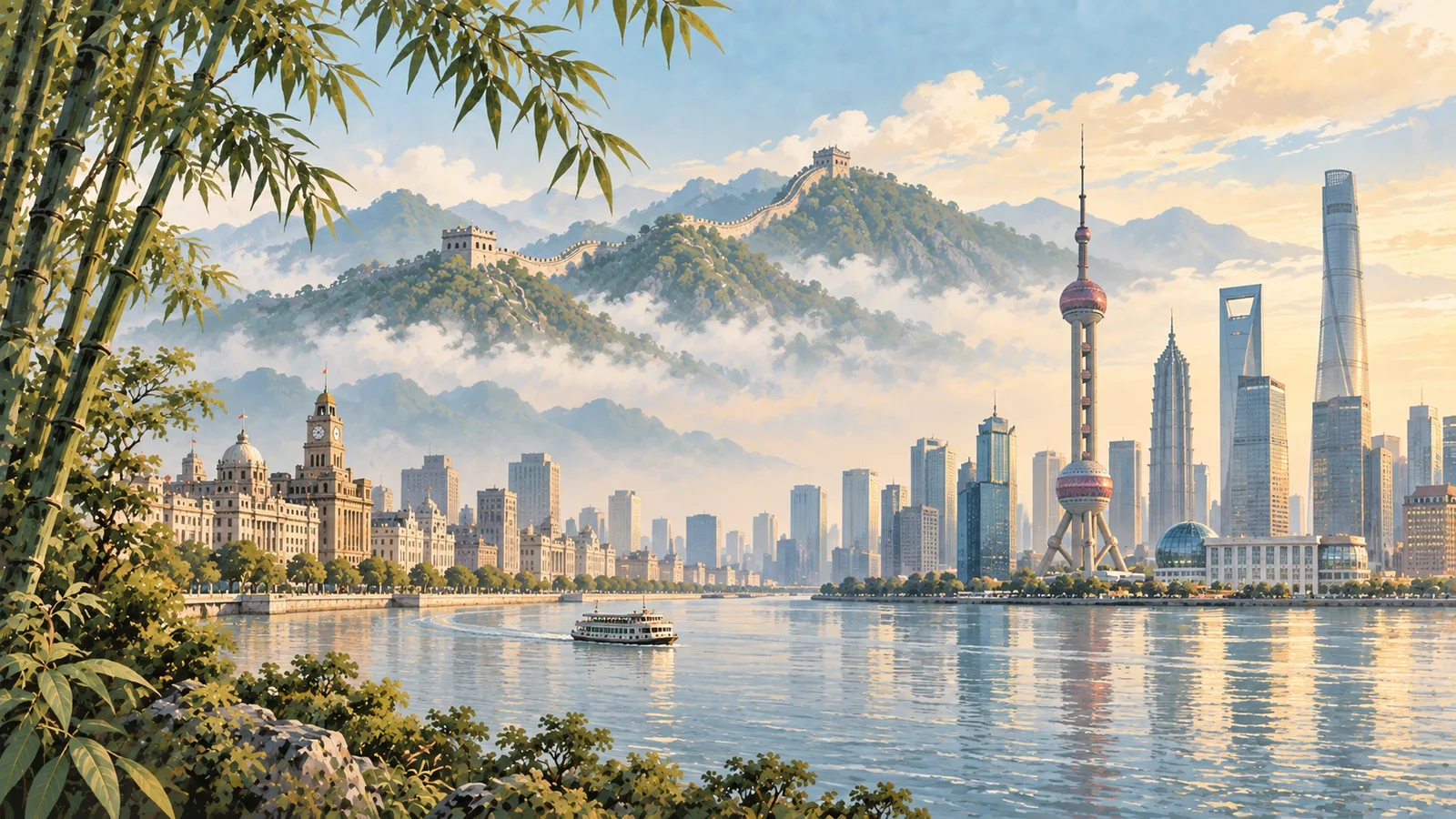


Shanghai: what to expect
Shanghai's skyline is the introduction, not the plot. The useful city lives between lilong lanes, Art Deco apartment blocks, river warehouses, breakfast counters and metro stops that make a vast metropolis surprisingly navigable.
Is this your trip?
Who Shanghai is for
Architecture travellers
Treaty-port facades, lilong housing and new towers form a dense urban archive.
Food explorers
Breakfast stalls, Jiangnan cooking and every regional cuisine reward neighbourhood days.
Contemporary-city people
Design, art and nightlife are as central as heritage.
Easy first-time China trips
Transport, hotel choice and international flight access reduce friction.
Maybe not for you: Do not spend the whole stay alternating between the Bund and malls. Shanghai earns its nights in residential streets and food districts where the skyline disappears.
Season by season
When to visit Shanghai
March–May and October–November. Spring and autumn are mild but can be damp. The plum-rain period in June is humid and wet, midsummer is very hot, and late summer can see typhoon disruption. Winter is cold and clammy rather than severe.
- Best
Spring
March–May
Mild, green and changeable; carry a layer and compact umbrella.
- Mixed
Plum rain
June–early July
Persistent humidity and rain make outdoor plans less reliable.
- Avoid
High summer
July–September
Hot, humid and exposed to typhoon disruption.
- Good
Autumn and winter
October–February
October and November are excellent; winter is cool, damp and quieter.
Weather · monthly normals
Shanghai is humid subtropical, with hot wet summers and cool damp winters.
Do fewer things better
Things to do in Shanghai
A short, ordered set of experiences with the timing or planning catch that makes each one work.
- 1
Walk the Bund before breakfast
Huangpu River
The skyline, customs buildings and river traffic read cleanly before tour groups arrive.
- 2
Trace residential modernism
Former French Concession
Plane trees, lane houses and apartment blocks reward an architecture-led walk with local context.
- 3
Cross the river once
Lujiazui
See the towers from below or choose one viewpoint; collecting observation decks adds little.
- 4
Use a contemporary art cluster
West Bund or M50
Check current programmes and give one institution time.
- 5
Eat a Shanghai breakfast
Neighbourhood stalls
Shengjian bao, scallion-oil noodles and soy milk make a better city introduction than a hotel buffet.
- 6
Choose one Jiangnan extension
Suzhou, Hangzhou or a water town
Each deserves its own logic; avoid a packaged day that samples all three.
Area by area
The neighbourhoods of Shanghai
The map is deliberately static and schematic: enough geography to choose a base and group a day, without loading a public mapping service.
| Area | What it is like | Why go |
|---|---|---|
1 Bund & Huangpu first visit | Riverfront monuments, old commercial streets and dense central access. | Stay for a short iconic visit, then walk west into ordinary streets. |
2 Former French Concession walking and food | Tree-lined avenues, lane houses, cafés and layered residential history. | The city's best long walk and most forgiving first base. |
3 Jing'an central transport | Temple, offices, shopping and strong metro intersections. | Efficient for travellers balancing east and west Shanghai. |
4 Xintiandi & south Huangpu architecture and evenings | Restored shikumen, polished dining and nearby historic lanes. | Useful as a contrast, but do not confuse the redevelopment with the whole city. |
5 Lujiazui skyline and families | Towers, museums, malls and broad river views. | Visit for modern scale; stay only if business or high-rise hotels are the brief. |
6 Hongkou literature and local streets | Historic immigrant districts, parks and quieter lanes north of the Bund. | A strong second-visit area with meaningful twentieth-century history. |
Choose the base, then the hotel
Where to stay in Shanghai
For most first visits: Former French Concession for walking; Jing'an for central transport; the Bund for a short first visit.
Former French Concession
Food, architecture and several metro lines without a corporate-night feel.
Jing'an
Good cross-city transport and broad hotel choice.
Bund west side
Pay for the view if it matters, but verify the room actually faces the river.
Lujiazui
Polished and efficient, disconnected from the best street life after work.
Order with a point of view
What to eat in Shanghai
Local food is more useful as an area decision than as a checklist of famous dishes.
- 01
Shengjian bao
Yangpu, Huangpu and local breakfast shops
Pan-fried soup buns demand care and are best where turnover is fast.
- 02
Xiaolongbao
Specialist shops
Thin wrappers and hot broth matter more than a famous branch name.
- 03
Congyou banmian
Neighbourhood noodle counters
Scallion-oil noodles are simple, fragrant and deeply local.
- 04
Hongshao rou
Traditional Shanghainese restaurants
Red-braised pork shows the region's sweet-savory balance.
- 05
Regional Chinese cuisines
Citywide
Shanghai's migrant dining scene makes Yunnan, Xinjiang, Sichuan and Cantonese meals easy to compare.
Useful on the ground
Local tips for Shanghai
The Bund is best from both banks
See the towers from Puxi; cross once for their ground-level scale.
Addresses need the district and Chinese text
Repeated road names and large compounds can confuse drivers and maps.
Metro exits matter
One station may have more than a dozen; note the exact exit before surfacing.
Prepare payments and connectivity
Set up current mobile-payment access and the online tools you need before arrival.
Water towns peak midday
Go early, late or overnight if atmosphere matters more than convenience.
Common questions
Quick answers about Shanghai
- When is the best time to visit Shanghai?
- March–May and October–November. Spring and autumn are mild but can be damp. The plum-rain period in June is humid and wet, midsummer is very hot, and late summer can see typhoon disruption. Winter is cold and clammy rather than severe.
- How many days do you need in Shanghai?
- 3–4 days. Shanghai's skyline is the introduction, not the plot. The useful city lives between lilong lanes, Art Deco apartment blocks, river warehouses, breakfast counters and metro stops that make a vast metropolis surprisingly navigable.
- Where should you stay in Shanghai?
- Former French Concession for walking; Jing'an for central transport; the Bund for a short first visit. Food, architecture and several metro lines without a corporate-night feel.
Keep building the route
Shanghai is part of China
Use the country guide for visa, money, long-distance transport and the route between cities. Then compare the other worked-out stops below.
- BeijingImperial scale, hutong intimacy and a capital that starts early.
- Xi'anA walled city where imperial China meets the Silk Roads.
- ChengduTea-house tempo, serious spice and a city larger than its mood.
- HangzhouA lake city whose calm survives if you leave the main causeway.
- GuilinKarst country where the best city guide points beyond the city.