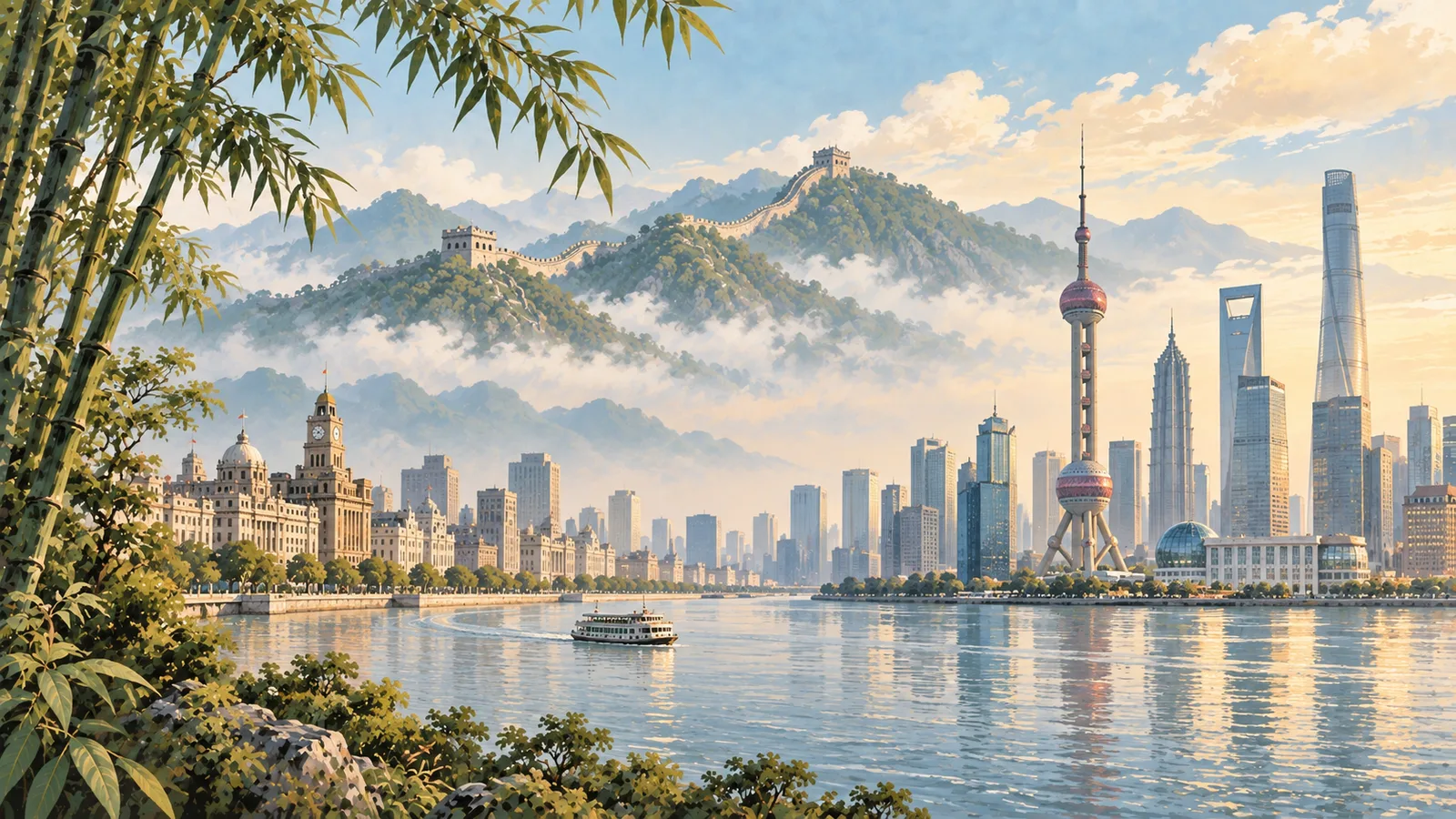


Suzhou: what to expect
Suzhou rewards an overnight stay for quieter canal streets and garden visits. Balance the old town with the very different contemporary city east of it. This city guide groups the destination into six useful areas so the stay works on the ground, not only on a country map.
Is this your trip?
Who Suzhou is for
First visit travellers
Suzhou rewards an overnight stay for quieter canal streets and garden visits. Balance the old town with the very different contemporary city east of it.
Travellers with 2–3 days
That window gives Suzhou enough room for one anchor area and one contrasting cluster per day.
Canal walks
Pingjiang Road and Humble Administrator's Garden area make that interest practical rather than a country-level promise.
Area-led planners
Six fixed clusters make it easier to choose a base and avoid repeated cross-destination transfers.
Maybe not for you: A compressed checklist is the weak version of Suzhou. Choose a few gardens well; repeated timed entries can turn the day into a queue circuit.
Season by season
When to visit Suzhou
April–May and October–November. NASA POWER 2001–2020 daily grid averages at the city centroid, rounded for planning; a gridded point proxy rather than a weather-station normal or live forecast. Conditions can still change sharply by elevation, coast and exposure, so use the chart for route timing and the current forecast for the day itself.
- Best
Spring
March–May
Fast warming, blossom and holiday crowds; mornings can remain cold.
- Mixed
Summer
June–August
Hot, humid and wet, with storms or typhoon disruption possible.
- Best
Autumn
September–November
Clearer air, comfortable walking and strong foliage later in the season.
- Good
Winter
December–February
Cold and dry to snowy depending on coast and elevation, with lighter crowds.
Weather · monthly normals
NASA POWER 2001–2020 daily grid averages at the city centroid, rounded for planning; a gridded point proxy rather than a weather-station normal or live forecast. Values are rounded planning normals rather than a live forecast.
Do fewer things better
Things to do in Suzhou
A short, ordered set of experiences with the timing or planning catch that makes each one work.
- 1
Start with Old Town
Old Town
The older city grid retains canals and low-rise streets.
- 2
Walk Pingjiang Road without stacking it
Pingjiang Road
A historic canal corridor supports a compact walking route.
- 3
Use Humble Administrator's Garden area for gardens
Humble Administrator's Garden area
Major classical gardens cluster north of the old centre.
- 4
Give Shantang Street a deliberate half-day
Shantang Street
A separate canal district extends northwest from the old town.
- 5
See Tiger Hill outside peak hours
Tiger Hill
The historic hill lies outside the tight central circuit.
- 6
Keep Jinji Lake weather-flexible
Jinji Lake
The eastern lakefront contrasts with the older canal landscape.
Choose a few gardens well; repeated timed entries can turn the day into a queue circuit.
Area by area
The neighbourhoods of Suzhou
A real map at local-city scale: enough geography to choose a base, compare areas and group a day. Numbered places match the notes below.
| Area | What it is like | Why go |
|---|---|---|
1 Old Town first visit | The older city grid retains canals and low-rise streets. | Use Old Town when first visit matters more than crossing the whole destination. |
2 Pingjiang Road canal walks | A historic canal corridor supports a compact walking route. | Use Pingjiang Road when canal walks matters more than crossing the whole destination. |
3 Humble Administrator's Garden area gardens | Major classical gardens cluster north of the old centre. | Use Humble Administrator's Garden area when gardens matters more than crossing the whole destination. |
4 Shantang Street heritage | A separate canal district extends northwest from the old town. | Use Shantang Street when heritage matters more than crossing the whole destination. |
5 Tiger Hill history outing | The historic hill lies outside the tight central circuit. | Use Tiger Hill when history outing matters more than crossing the whole destination. |
6 Jinji Lake modern city | The eastern lakefront contrasts with the older canal landscape. | Use Jinji Lake when modern city matters more than crossing the whole destination. |
Choose the base, then the hotel
Where to stay in Suzhou
For most first visits: Central accommodation near Old Town, with the actual address and transport checked.
Accommodation near Old Town
Choose a verified accommodation address convenient for Old Town. Check walking access and evening transport; the attraction or public space itself is not accommodation.
Accommodation near Pingjiang Road
Choose a verified accommodation address convenient for Pingjiang Road. Check walking access and evening transport; the attraction or public space itself is not accommodation.
Accommodation near Humble Administrator's Garden area
Choose a verified accommodation address convenient for Humble Administrator's Garden area. Check walking access and evening transport; the attraction or public space itself is not accommodation.
Accommodation near Shantang Street
Choose a verified accommodation address convenient for Shantang Street. Check walking access and evening transport; the attraction or public space itself is not accommodation.
Order with a point of view
What to eat in Suzhou
Local food is more useful as an area decision than as a checklist of famous dishes.
- 01
Suzhou-style noodles
Suzhou restaurants, cafés and markets; check individual menus
A regional food starting point for this stay; ask the venue about preparation, ingredients and provenance.
- 02
Noodles
Suzhou restaurants, cafés and markets; check individual menus
Ask for the regional preparation; noodle dishes are not interchangeable across China.
- 03
Dumplings
Suzhou restaurants, cafés and markets; check individual menus
A broad menu category with different local fillings and cooking methods.
- 04
Seasonal vegetables
Suzhou restaurants, cafés and markets; check individual menus
A useful part of a shared meal, with ingredients changing by region.
- 05
Tea
Suzhou restaurants, cafés and markets; check individual menus
Ask about the local tea tradition rather than assuming one national style.
Useful on the ground
Local tips for Suzhou
Plan the transfer, not only the distance
Choose a few gardens well; repeated timed entries can turn the day into a queue circuit.
Entry rules
Visa-free, transit and visa requirements change by passport and itinerary. Check the official Chinese embassy or immigration route for the exact travel dates.
Payments
Mobile payment is dominant. Confirm current international-card setup before travel and keep a physical card plus some cash as backup.
Internet and apps
Prepare the services you need before arrival, including translation, maps and offline copies. Network access and app availability differ from home.
Plugs and power
China uses 220 V. Type A, C and I sockets appear; a universal adapter is the sensible answer.
Common questions
Quick answers about Suzhou
- When is the best time to visit Suzhou?
- April–May and October–November. NASA POWER 2001–2020 daily grid averages at the city centroid, rounded for planning; a gridded point proxy rather than a weather-station normal or live forecast. Conditions can still change sharply by elevation, coast and exposure, so use the chart for route timing and the current forecast for the day itself.
- How many days do you need in Suzhou?
- 2–3 days. Suzhou rewards an overnight stay for quieter canal streets and garden visits. Balance the old town with the very different contemporary city east of it. This city guide groups the destination into six useful areas so the stay works on the ground, not only on a country map.
- Where should you stay in Suzhou?
- Central accommodation near Old Town, with the actual address and transport checked. Choose a verified accommodation address convenient for Old Town. Check walking access and evening transport; the attraction or public space itself is not accommodation.
Keep building the route
Suzhou is part of China
Use the country guide for visa, money, long-distance transport and the route between cities. Then compare the other worked-out stops below.
- BeijingImperial scale, hutong intimacy and a capital that starts early.
- ShanghaiA port city read best at street level, not from one tower.
- Xi'anA walled city where imperial China meets the Silk Roads.
- ChengduTea-house tempo, serious spice and a city larger than its mood.
- HangzhouA lake city whose calm survives if you leave the main causeway.
- GuilinKarst country where the best city guide points beyond the city.
- NanjingImperial history and a modern Yangtze city
- ChongqingRiver confluences and a genuinely vertical city
- KunmingYunnan's highland capital and a useful slower base
- XiamenMaritime history and a coastal Fujian base
- QingdaoCoastal hills and a layered port history
- LuoyangAncient-capital history and Buddhist stone art
- HarbinNortheastern architecture and a deliberate winter city
- DalianA northern port city of squares and coastal walks
- GuangzhouCantonese food and a long trading history