
La Fortuna: what to expect
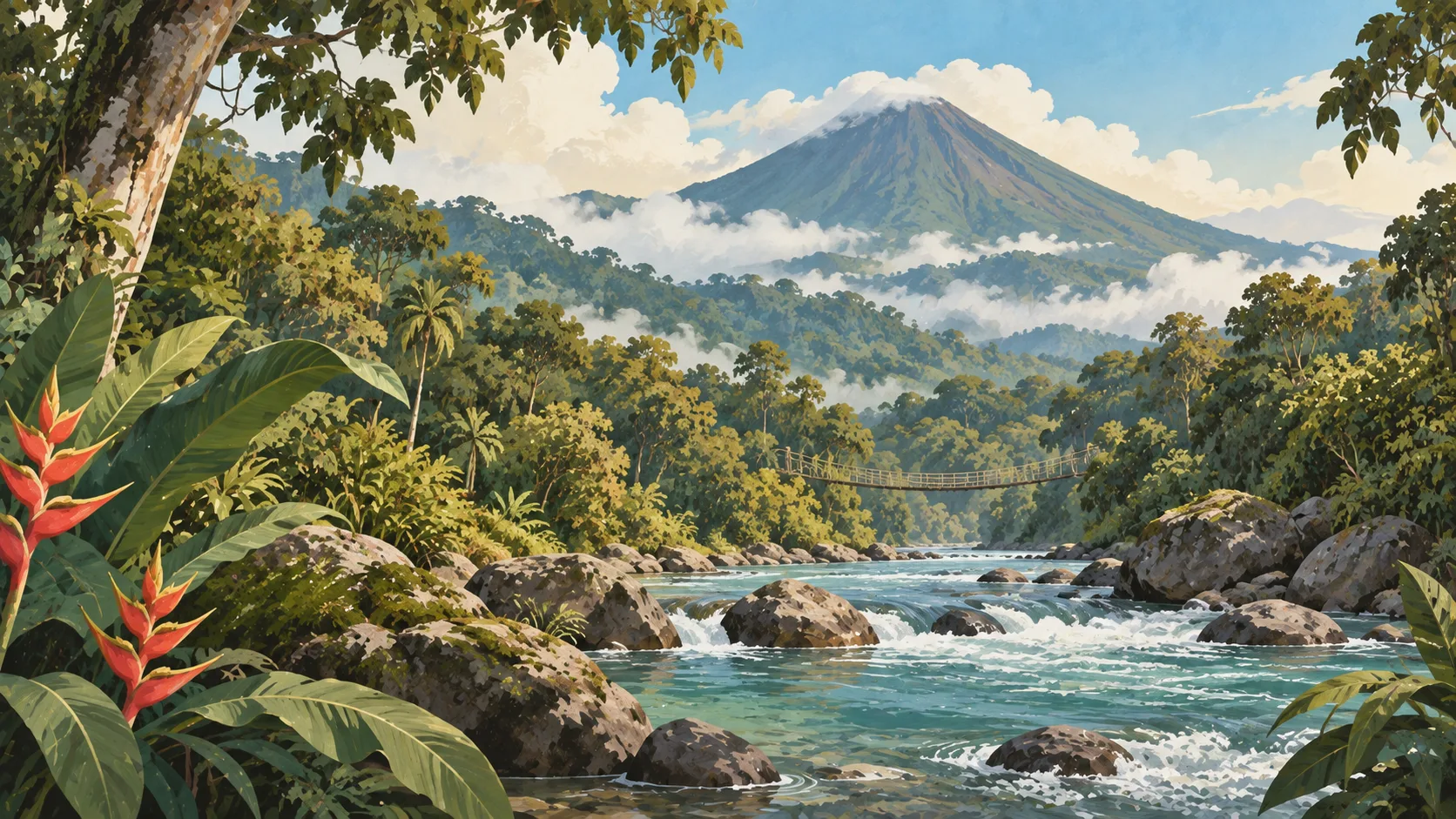
La Fortuna is a compact service town inside a much larger Arenal landscape. Pick two major nature days, choose hot springs that match the budget, and resist booking dawn-to-dark adventure packages that leave no room for weather or wildlife.
Is this your trip?
Who La Fortuna is for
Active nature travellers
Trails, rafting, canyoning and waterfall days are easy to combine.
Wildlife beginners
Guided forest walks make dense tropical habitat legible.
Families
A broad range of guides and hot-spring formats allows gentler pacing.
First Costa Rica routes
La Fortuna links Central Valley, Monteverde and Guanacaste logically.
Maybe not for you: It is one of the country's most commercial adventure hubs. Stay outside town or choose another region if zip-line menus and large thermal resorts overwhelm the forest brief.
Season by season
When to visit La Fortuna
February–April for drier odds; year-round with rain flexibility. Rain is possible in every month on the Caribbean-facing northern plains. February through April are often drier; May through January are greener and wetter. Volcano visibility changes by hour, not only season.
- Best
Drier window
February–April
Better trail odds and stronger demand; clear volcano views are never guaranteed.
- Good
Early green
May–June
Lush forest, regular showers and good wildlife activity.
- Good
Mid-year
July–August
Mixed rain with busy family travel periods.
- Mixed
Wet stretch
September–January
Frequent heavy rain; waterfalls are powerful and road plans need margin.
Weather · monthly normals
La Fortuna is warm and wet year-round; monthly averages cannot predict short-lived volcano cloud.
Do fewer things better
Things to do in La Fortuna
A short, ordered set of experiences with the timing or planning catch that makes each one work.
- 1
Walk Arenal's lava landscapes with a guide
Arenal Volcano area
Secondary forest, old flows and distant views need ecological and geological context.
- 2
Swim only where conditions allow
La Fortuna Waterfall
The stairs are substantial and currents vary; follow staff boundaries.
- 3
Choose hot springs by atmosphere
Thermal corridor
Small, quiet pools and large family resorts solve different trips; reserve peak evenings.
- 4
Take a dawn wildlife walk
Bogarin or forest reserves
A good naturalist turns a green wall into sloths, frogs, birds and behaviour.
- 5
Cross hanging bridges without rushing
Arenal forest
Go early, keep voices low and use a guide if wildlife is the goal.
- 6
Use Lake Arenal or a river for one active day
Region
Paddle, raft or boat according to rain, wind and comfort rather than a fixed package.
Area by area
The areas of La Fortuna
The map is deliberately static and schematic: enough geography to choose a base and group a day, without loading a public mapping service.
| Area | What it is like | Why go |
|---|---|---|
1 La Fortuna centre no-car convenience | Restaurants, sodas, tour offices and the main square. | Best for easy evenings; volcano views depend on the exact room. |
2 Hot-springs corridor thermal resorts | Spread-out hotels and pools west of town. | Choose for onsite relaxation and budget, not walkability. |
3 Arenal park edge trails and nature | Lava-flow trails and forest closer to the volcano. | A landscape-first base with fewer spontaneous meals. |
4 El Castillo quiet and views | Small settlement south of the volcano with lake and forest access. | Best for independent travellers with transport and a slower rhythm. |
5 Waterfall & south road adventure access | Forest lodges and activity operators south of town. | Good for nature, less convenient after dark without a car. |
6 Lake Arenal water and long stays | Wide lake shore, wind sports and scattered lodges. | Useful as a separate slow base, not a town neighbourhood. |
Choose the base, then the hotel
Where to stay in La Fortuna
For most first visits: Town for restaurants and no-car ease; thermal corridor or El Castillo for landscape.
La Fortuna centre
Walk to food and use operator pickups.
Thermal corridor
Compare day-pass access, meal plans and family atmosphere.
El Castillo or park edge
Views and nature improve as dining convenience falls.
Larger thermal properties
Pools and activities simplify logistics; verify what is included.
Order with a point of view
What to eat in La Fortuna
Local food is more useful as an area decision than as a checklist of famous dishes.
- 01
Casado
Town sodas
The dependable lunch after a trail, usually better value off the square.
- 02
Patacones and ceviche
Casual restaurants
Good shared starters in the heat; ask about fish turnover.
- 03
Farm cheese and dairy
Northern plains producers
The cattle region adds a less obvious local food thread.
- 04
Cacao
Small farm tours
Choose a farm-led visit that explains growing and fermentation, not only a tasting table.
- 05
Coffee
Local roasters and combined farm visits
Arenal is not the main highland coffee zone; good operators explain that honestly.
Useful on the ground
Local tips for La Fortuna
The volcano makes no promises
If cloud clears, look now; do not save the view for tomorrow.
Attractions are far apart
A town hotel does not make waterfalls, springs and park gates walkable.
Rain gear should breathe
Heavy ponchos trap heat; quick-dry layers and a dry bag work better.
Do not touch wildlife
Guides should model distance, quiet and no baiting.
The Monteverde transfer is not a direct road
Lake crossings reduce time but still involve boats, vehicles and luggage handling.
Common questions
Quick answers about La Fortuna
- When is the best time to visit La Fortuna?
- February–April for drier odds; year-round with rain flexibility. Rain is possible in every month on the Caribbean-facing northern plains. February through April are often drier; May through January are greener and wetter. Volcano visibility changes by hour, not only season.
- How many days do you need in La Fortuna?
- 3–4 days. La Fortuna is a compact service town inside a much larger Arenal landscape. Pick two major nature days, choose hot springs that match the budget, and resist booking dawn-to-dark adventure packages that leave no room for weather or wildlife.
- Where should you stay in La Fortuna?
- Town for restaurants and no-car ease; thermal corridor or El Castillo for landscape. Walk to food and use operator pickups.
Keep building the route
La Fortuna is part of Costa Rica
Use the country guide for visa, money, long-distance transport and the route between cities. Then compare the other worked-out stops below.
- San JoséA working capital with better museums and food than its transit-stop reputation.
- MonteverdeCloud forest, night walks and roads that force a slower plan.
- Manuel AntonioDense rainforest meeting a busy Pacific beach corridor.
- TamarindoAn easy surf town that works best when you know what convenience costs.
- Puerto ViejoAfro-Caribbean culture, rainforest and beaches with their own weather.