

Manuel Antonio: what to expect
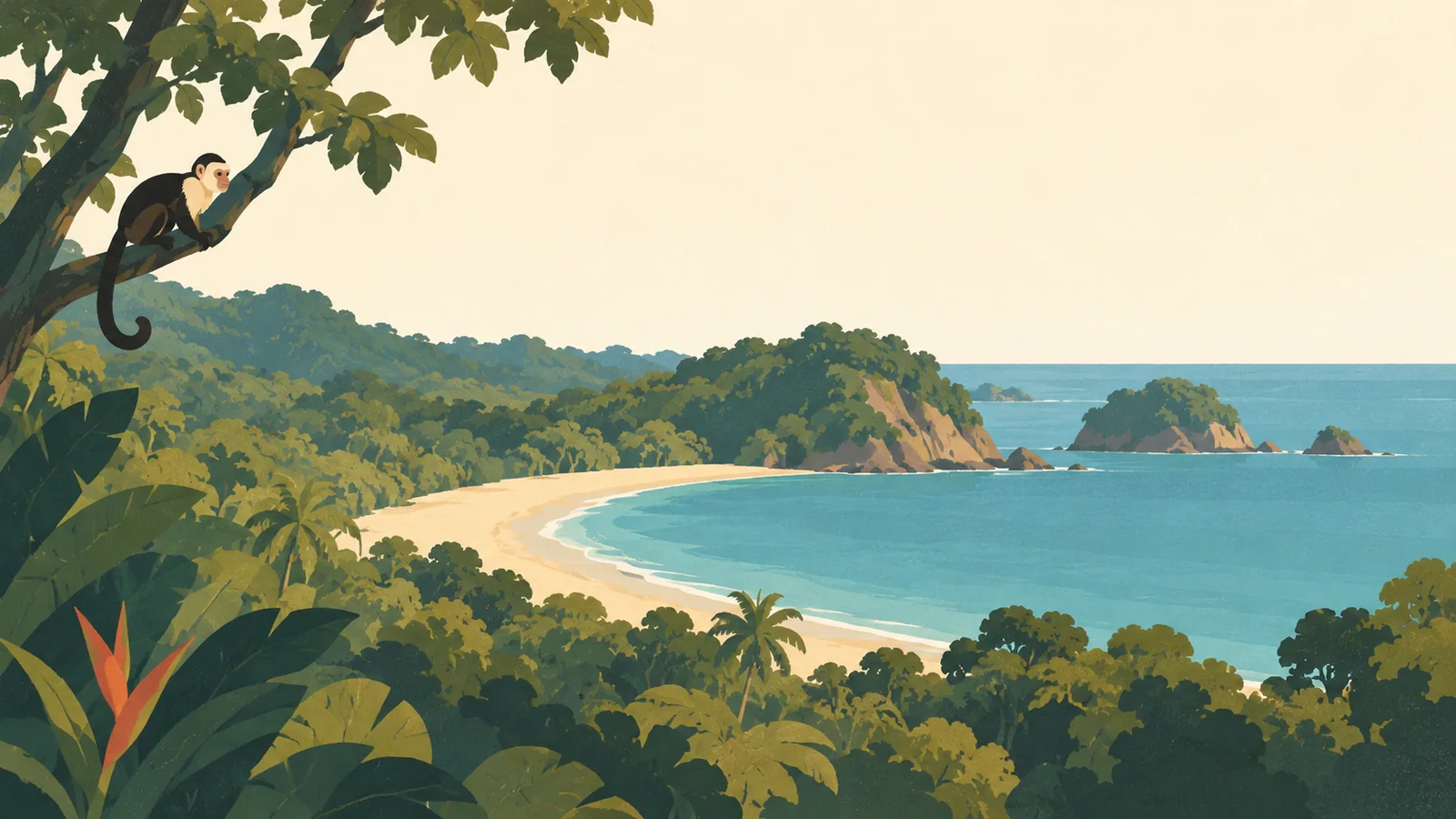
Manuel Antonio combines easy wildlife sightings and handsome beaches with some of Costa Rica's heaviest visitor pressure. Reserve the national park through the official channel, enter early and choose a base by slope, beach access and appetite for taxis.
Is this your trip?
Who Manuel Antonio is for
Wildlife first-timers
Monkeys, sloths and coastal forest are unusually accessible with a guide.
Beach-and-forest trips
A single protected area links trails and swimmable coves.
Families
Short trails and clear logistics work when crowds and heat are managed.
Short Pacific stops
Three focused days fit naturally between Central Valley and the south.
Maybe not for you: It is not a hidden nature retreat. Travellers seeking solitude should consider quieter Pacific parks and treat Manuel Antonio as a carefully timed visit.
Season by season
When to visit Manuel Antonio
December–April; May–July for greener, quieter mornings. Dry season offers the most reliable beach weather and the largest crowds. Early green season is lush with regular afternoon rain; September and October are normally the wettest Pacific months.
- Best
Dry season
December–April
Sunny, hot and heavily booked; reserve park and rooms early.
- Good
Early green
May–July
Lush mornings, afternoon rain and somewhat lower demand.
- Mixed
Late green
August–November
Heavy rain peaks around September and October; roads and sea conditions need margin.
- Avoid
Holiday peak
Late December–early January
Excellent weather but maximum domestic and international pressure.
Weather · monthly normals
The central Pacific stays hot year-round, with a pronounced wet season from May into November.
Do fewer things better
Things to do in Manuel Antonio
A short, ordered set of experiences with the timing or planning catch that makes each one work.
- 1
Enter the national park at opening
Manuel Antonio National Park
Use the official reservation route, bring permitted items only and consider a licensed naturalist guide.
- 2
Let one beach be enough
Park beaches or Espadilla
Heat and wildlife make repeated beach transfers unnecessary.
- 3
Watch wildlife without feeding it
Forest and hotel grounds
Secure food and bags; habituated monkeys are not an invitation to interact.
- 4
Spend an evening in Quepos
Quepos
The working town adds local restaurants and marina life beyond the hotel ridge.
- 5
Take a mangrove or river trip carefully
Damas area
Choose small groups and operators that keep distance from wildlife.
- 6
Use rain as a pacing tool
Hotel or covered terrace
A wet afternoon is normal in green season; protect one flexible window rather than fighting it.
Area by area
The areas of Manuel Antonio
A real map at local-city scale: enough geography to choose a base, compare areas and group a day. Numbered places match the notes below.
| Area | What it is like | Why go |
|---|---|---|
1 Park gate area early entry | Small hotels, restaurants and immediate park access. | Best for the first slot; evenings are quiet and visitor-facing. |
2 Playa Espadilla beach access | Public beach, surf and a strip of services. | Convenient for sand, busy in peak season and exposed to valuables risk. |
3 Manuel Antonio hill views and hotels | Steep ridge with restaurants, forest and ocean-facing stays. | Great views, but exact bus stop and slope matter. |
4 Biesanz & west hill quieter cove | Forest hotels and access to a smaller bay. | Choose for quiet and wildlife, with taxi dependence after dark. |
5 Quepos value and local life | Working town, bus hub, market and broad dining. | Best value and transport, less immediate beach atmosphere. |
6 Marina Pez Vela boats and polished dining | Modern marina west of central Quepos. | Useful for departures and sunset, not a substitute for the town. |
Choose the base, then the hotel
Where to stay in Manuel Antonio
For most first visits: Near the park for dawn entry, on the hill for views, or Quepos for value and local life.
Near the park gate
Walk to the first entry and avoid a pre-dawn taxi.
Manuel Antonio hill
Check stairs, bus access and room orientation before booking.
Quepos
Local food and buses are easier; use the regular park route.
Biesanz side
Good for couples and wildlife, with less spontaneous movement.
Order with a point of view
What to eat in Manuel Antonio
Local food is more useful as an area decision than as a checklist of famous dishes.
- 01
Casado and seafood
Quepos sodas
Working-town lunches usually beat hotel-road markups.
- 02
Ceviche
Quepos and marina
Ask what fish is used and choose high-turnover kitchens.
- 03
Plantain dishes
Local restaurants
Patacones and sweet plantain make reliable shared sides.
- 04
Fresh fruit drinks
Sodas and cafés
Request less added sugar if you want the fruit itself.
- 05
Sunset dinner
Hill restaurants
Reserve for the view once; spend the other meals on food quality.
Useful on the ground
Local tips for Manuel Antonio
Buy park entry only through official channels
Ignore unofficial roadside sellers and check current closure days.
Food restrictions protect wildlife
Review permitted items before arrival; do not feed animals anywhere.
The hill is steep
A property that looks adjacent on a map may involve an exhausting climb.
Beach theft is practical, not theoretical
Bring little and keep belongings attended.
Use the local bus
It is often easier than parking along the park road.
Common questions
Quick answers about Manuel Antonio
- When is the best time to visit Manuel Antonio?
- December–April; May–July for greener, quieter mornings. Dry season offers the most reliable beach weather and the largest crowds. Early green season is lush with regular afternoon rain; September and October are normally the wettest Pacific months.
- How many days do you need in Manuel Antonio?
- 3 days. Manuel Antonio combines easy wildlife sightings and handsome beaches with some of Costa Rica's heaviest visitor pressure. Reserve the national park through the official channel, enter early and choose a base by slope, beach access and appetite for taxis.
- Where should you stay in Manuel Antonio?
- Near the park for dawn entry, on the hill for views, or Quepos for value and local life. Walk to the first entry and avoid a pre-dawn taxi.
Keep building the route
Manuel Antonio is part of Costa Rica
Use the country guide for visa, money, long-distance transport and the route between cities. Then compare the other worked-out stops below.
- San JoséA working capital with better museums and food than its transit-stop reputation.
- La FortunaA practical volcano town surrounded by water, forest and heat.
- MonteverdeCloud forest, night walks and roads that force a slower plan.
- TamarindoAn easy surf town that works best when you know what convenience costs.
- Puerto ViejoAfro-Caribbean culture, rainforest and beaches with their own weather.