
Puerto Viejo: what to expect
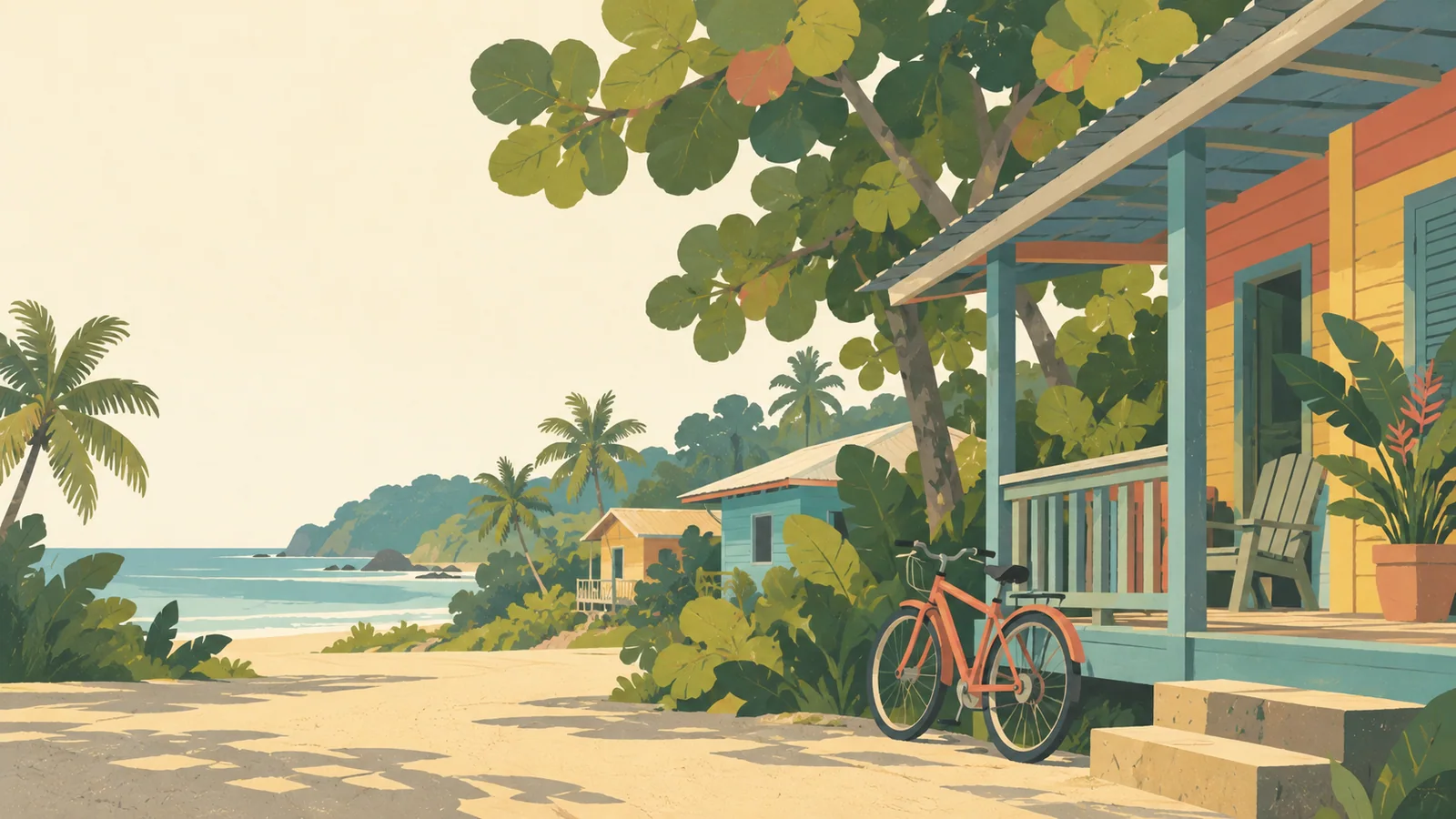
Puerto Viejo is not the Pacific coast with different sand. Afro-Costa Rican food and music, Indigenous Bribri communities, coral-fringed beaches and Caribbean rainfall give the south coast a separate identity that deserves several slow days.
Is this your trip?
Who Puerto Viejo is for
Culture-and-coast travellers
Food, music and history prevent the trip becoming only beach scenery.
Cyclists
A mostly flat coastal road links several beaches and small settlements.
Wildlife travellers
Cahuita, refuges and rescue centres create varied guided encounters.
Slow tropical trips
Four days allow weather to move without wrecking the itinerary.
Maybe not for you: The Caribbean coast has no guaranteed dry season. Travellers who need resort predictability, perfect roads and fixed daily sun should choose another brief.
Season by season
When to visit Puerto Viejo
February–March and September–October often bring calmer, drier spells. Rain falls in every month and the Caribbean pattern differs from the Pacific. February–March and September–October are often relatively drier, but local forecasts and sea conditions matter more than a national dry-season slogan.
- Best
Late winter window
February–March
Often somewhat drier with useful beach and cycling conditions.
- Mixed
Rainier stretch
April–July
Heavy showers, lush forest and variable sea; plans need slack.
- Best
Caribbean window
September–October
Often calmer and drier while the Pacific is at its wettest.
- Mixed
Year-end rains
November–January
Frequent rain and rougher conditions can affect beach and road days.
Weather · monthly normals
The south Caribbean is wet year-round and does not follow Guanacaste's dry-season pattern.
Do fewer things better
Things to do in Puerto Viejo
A short, ordered set of experiences with the timing or planning catch that makes each one work.
- 1
Cycle one beach corridor
Puerto Viejo to Punta Uva
Start early, use lights and stop often; the road is shared and narrow in places.
- 2
Walk Cahuita with a guide
Cahuita National Park
Coast, coral and forest come together; a naturalist adds far more than speed.
- 3
Eat Afro-Caribbean Costa Rican food
Town and Cahuita
Rice and beans cooked with coconut, rondón and patties carry regional history.
- 4
Choose Bribri-led cultural learning
Talamanca area
Book community-led cacao or cultural visits and avoid generic 'tribal' packaging.
- 5
Use a reputable wildlife centre
South Caribbean
Support rehabilitation that limits handling and does not stage animal selfies.
- 6
Match the beach to conditions
Cocles, Chiquita or Punta Uva
Reef, current and surf differ by beach and day; local warnings decide the swim.
Area by area
The areas of Puerto Viejo
A real map at local-city scale: enough geography to choose a base, compare areas and group a day. Numbered places match the notes below.
| Area | What it is like | Why go |
|---|---|---|
1 Puerto Viejo centre food and nightlife | Restaurants, shops, music and the main transport stop. | Best without a car; choose accommodation carefully for noise. |
2 Playa Cocles surf and balanced stay | Broad beach, cafés and lodging just south of town. | The easiest beach base with bicycle access to evenings. |
3 Playa Chiquita quiet and forest | Small coves, dense greenery and scattered lodges. | Better for sleep and nature, weaker for spontaneous dining. |
4 Punta Uva calm coves and families | Scenic headland, river and sheltered-looking bays. | Beautiful and popular; sea safety still depends on the day. |
5 Manzanillo village and refuge | End-of-road settlement beside Gandoca-Manzanillo refuge. | A slower base for guided nature, far from Puerto Viejo nightlife. |
6 Cahuita park and culture | Afro-Caribbean town beside a coastal national park. | Worth its own night when food and early park walking matter. |
Choose the base, then the hotel
Where to stay in Puerto Viejo
For most first visits: Town for evenings; Cocles or Punta Uva for beach and sleep.
Puerto Viejo centre edge
Walk home but avoid the loudest central blocks.
Playa Cocles
Easy cycling to town and immediate sand.
Chiquita or Punta Uva
Choose a lodge with meals or arrange evening transport.
Cahuita or Manzanillo
Move rather than commute if the park or refuge is the priority.
Order with a point of view
What to eat in Puerto Viejo
Local food is more useful as an area decision than as a checklist of famous dishes.
- 01
Caribbean rice and beans
Puerto Viejo and Cahuita
Cooked with coconut milk and distinct from the Central Valley version.
- 02
Rondón
Afro-Caribbean kitchens
Seafood, roots and coconut form a slow-cooked regional stew; availability may be limited.
- 03
Pati
Bakeries and snack counters
A spiced meat turnover with deep Caribbean roots.
- 04
Cacao
Bribri-led visits and local makers
Learn cultivation and processing with the people whose region produced it.
- 05
Fresh fish
Trusted local restaurants
Ask what arrived and accept that weather changes supply.
Useful on the ground
Local tips for Puerto Viejo
National weather summaries mislead here
Check the south-Caribbean forecast, not only San José or Pacific season labels.
Cycle visibly
Use lights, avoid dark riding and expect vehicles on the narrow road.
Cash backup helps
Small businesses and remote stretches can lose connectivity.
Do not handle wildlife
Ethical centres rehabilitate and release; selfies are a warning sign.
Respect living cultures
Book Indigenous experiences directly or through transparent community partners.
Common questions
Quick answers about Puerto Viejo
- When is the best time to visit Puerto Viejo?
- February–March and September–October often bring calmer, drier spells. Rain falls in every month and the Caribbean pattern differs from the Pacific. February–March and September–October are often relatively drier, but local forecasts and sea conditions matter more than a national dry-season slogan.
- How many days do you need in Puerto Viejo?
- 4 days. Puerto Viejo is not the Pacific coast with different sand. Afro-Costa Rican food and music, Indigenous Bribri communities, coral-fringed beaches and Caribbean rainfall give the south coast a separate identity that deserves several slow days.
- Where should you stay in Puerto Viejo?
- Town for evenings; Cocles or Punta Uva for beach and sleep. Walk home but avoid the loudest central blocks.
Keep building the route
Puerto Viejo is part of Costa Rica
Use the country guide for visa, money, long-distance transport and the route between cities. Then compare the other worked-out stops below.
- San JoséA working capital with better museums and food than its transit-stop reputation.
- La FortunaA practical volcano town surrounded by water, forest and heat.
- MonteverdeCloud forest, night walks and roads that force a slower plan.
- Manuel AntonioDense rainforest meeting a busy Pacific beach corridor.
- TamarindoAn easy surf town that works best when you know what convenience costs.