

Monteverde: what to expect
Monteverde is a region of reserves and small settlements, not one walkable mountain town. The value lies in two different forest walks, a good naturalist and enough time for cloud, wind and rough-road transfers to stop dictating the entire stay.
Is this your trip?
Who Monteverde is for
Birders and naturalists
Elevation and habitat diversity reward skilled guides and early hours.
Cool-climate breaks
Mountain air is a genuine contrast to both coasts.
Families with older children
Suspension bridges and guided night walks make ecology tangible.
Slow nature travellers
The weather and roads reward staying rather than passing through.
Maybe not for you: Monteverde is not an easy add-on for travellers who dislike winding rough roads, damp gear or early wildlife starts. The cloud forest is atmospheric, not guaranteed panoramic scenery.
Season by season
When to visit Monteverde
January–April; November–December for lush forest with wind and rain. The drier months still bring cloud, mist and strong trade winds. The wet season is lush and quieter but trails and roads become slower. Temperatures are much cooler than the coast throughout the year.
- Best
Dry and windy
January–March
Lower rainfall but persistent wind and fast-moving cloud.
- Good
Transition
April–May
Greener forest with increasing afternoon rain.
- Mixed
Wet season
June–October
Frequent rain, muddy trails and fewer visitors; mornings remain useful.
- Good
Lush transition
November–December
Rain gradually eases, wind rises and forest remains saturated.
Weather · monthly normals
Monteverde's elevation keeps days mild and nights cool; mist, wind and rain are part of the cloud-forest system.
Do fewer things better
Things to do in Monteverde
A short, ordered set of experiences with the timing or planning catch that makes each one work.
- 1
Enter a cloud-forest reserve at opening
Monteverde or Santa Elena reserve
Quiet, guide skill and weather matter more than collecting both famous names.
- 2
Take one responsible night walk
Private reserve
Small groups, no wildlife handling and careful light use are non-negotiable.
- 3
Look for quetzals with patience
Forest edges and fruiting trees
A guide improves odds; no sighting is guaranteed or owed.
- 4
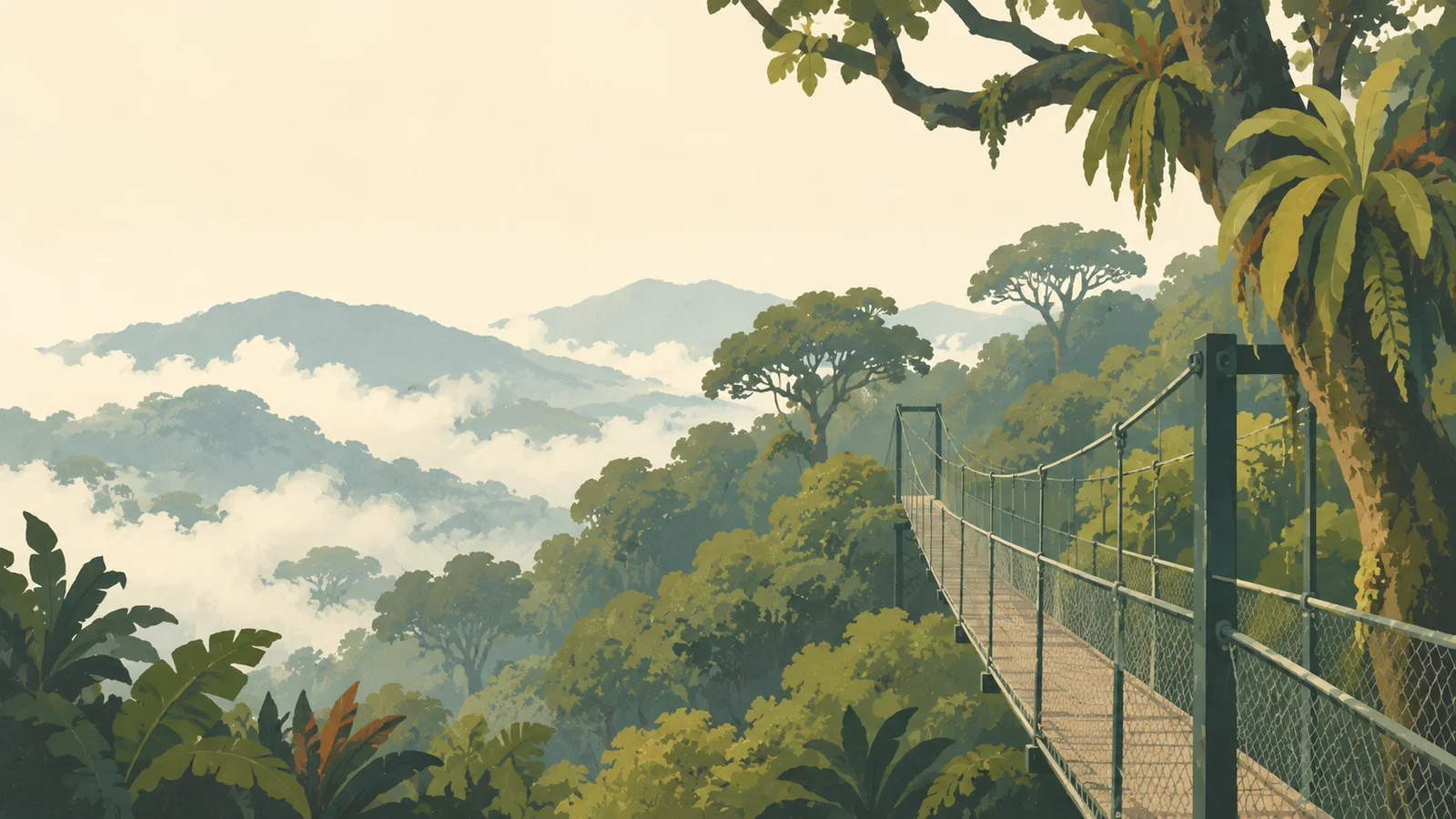
Cross canopy bridges slowly
Reserve or managed park
The forest layers, epiphytes and weather are the experience, not speed or height alone.
- 5
Visit the community history
Monteverde village
Quaker settlement and conservation history explain how the region developed.
- 6
Keep a non-forest half-day
Coffee, dairy or craft producer
A grounded local visit balances a schedule of guided reserves.
Area by area
The areas of Monteverde
A real map at local-city scale: enough geography to choose a base, compare areas and group a day. Numbered places match the notes below.
| Area | What it is like | Why go |
|---|---|---|
1 Santa Elena convenience | Main town services, restaurants, ATMs and shuttle pickups. | The easiest base without a car, though not inside the forest. |
2 Cerro Plano balanced stay | Lodges and restaurants between town and reserves. | A practical compromise with quieter nights and taxi access. |
3 Monteverde village history and calm | Small settlement near the original reserve and community institutions. | Best for atmosphere and early reserve access. |
4 Monteverde Cloud Forest guided nature | High-elevation reserve with structured trails and strict entry. | Book a morning slot and a naturalist when ecology is the priority. |
5 Curi-Cancha birding | Mixed forest and open edges known for productive wildlife walks. | A strong second habitat rather than another identical forest visit. |
6 San Luis valley rural and long stay | Lower, warmer valley with farms and quieter lodges. | Choose for immersion and transport independence, not town convenience. |
Choose the base, then the hotel
Where to stay in Monteverde
For most first visits: Santa Elena for convenience; Cerro Plano or Monteverde village for quieter forest access.
Santa Elena
Services and pickups are walkable.
Cerro Plano
Better lodge atmosphere with short taxis to town and reserves.
Monteverde village
Stay near the reserve and accept limited late dining.
San Luis
Arrange transfers and plan to eat at the lodge or nearby farms.
Order with a point of view
What to eat in Monteverde
Local food is more useful as an area decision than as a checklist of famous dishes.
- 01
Casado
Santa Elena sodas
A warm, practical plate after a cool forest morning.
- 02
Local dairy
Cheese shops and producers
Dairy history is central to the settlement story.
- 03
Coffee
Farm visits on lower slopes
Good tours connect altitude, processing and family economics.
- 04
Trout
Mountain restaurants
A common cool-climate menu choice; ask how it is sourced.
- 05
Cacao and sugarcane
Lower-elevation farms
Combined tours make more sense when the farm, not a demonstration room, leads.
Useful on the ground
Local tips for Monteverde
Pack for cool rain
A coast forecast does not apply at 1,400 metres.
Reserve transfers before dark
Roads are slower than distance suggests and signage thins.
Two reserves can be different
Choose by habitat, trail style and guide rather than name recognition.
Wildlife walks start early or late
Protect sleep and leave midday unscheduled.
Cash backup matters
Card acceptance is broad but weather and connectivity can interrupt terminals.
Common questions
Quick answers about Monteverde
- When is the best time to visit Monteverde?
- January–April; November–December for lush forest with wind and rain. The drier months still bring cloud, mist and strong trade winds. The wet season is lush and quieter but trails and roads become slower. Temperatures are much cooler than the coast throughout the year.
- How many days do you need in Monteverde?
- 2–3 nights. Monteverde is a region of reserves and small settlements, not one walkable mountain town. The value lies in two different forest walks, a good naturalist and enough time for cloud, wind and rough-road transfers to stop dictating the entire stay.
- Where should you stay in Monteverde?
- Santa Elena for convenience; Cerro Plano or Monteverde village for quieter forest access. Services and pickups are walkable.
Keep building the route
Monteverde is part of Costa Rica
Use the country guide for visa, money, long-distance transport and the route between cities. Then compare the other worked-out stops below.
- San JoséA working capital with better museums and food than its transit-stop reputation.
- La FortunaA practical volcano town surrounded by water, forest and heat.
- Manuel AntonioDense rainforest meeting a busy Pacific beach corridor.
- TamarindoAn easy surf town that works best when you know what convenience costs.
- Puerto ViejoAfro-Caribbean culture, rainforest and beaches with their own weather.